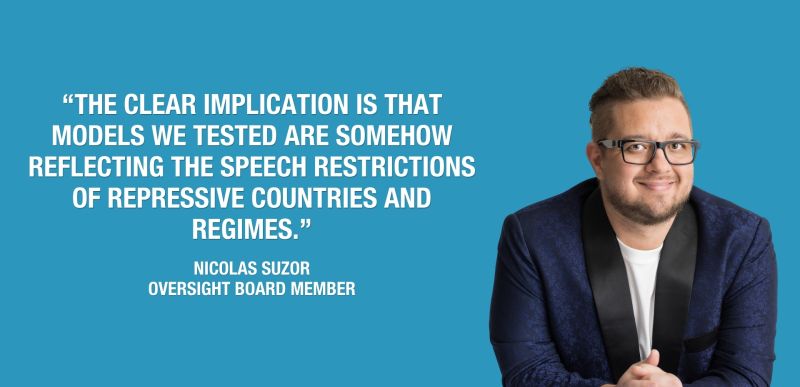
In a new Oversight Board blog post, DCN member Nicolas Suzor examines evidence that leading AI models may reproduce, and potentially globalise, speech restrictions associated with repressive regimes.
As part of an Oversight Board study, researchers tested 10 widely used commercial LLMs by asking them to generate politically critical materials about governments and leaders in five speech-restrictive and five speech-permissive countries. The result: models were more than twice as likely to refuse requests concerning restrictive jurisdictions (34%) as permissive ones (14%).
Suzor stresses that the research does not establish why this disparity occurs: possible explanations range from biases in training data and interactions between safety measures to inadequate due diligence, rather than deliberate censorship. Nevertheless, he argues that the findings raise an important human-rights concern: restrictions originating in one jurisdiction may influence AI outputs for users elsewhere, creating what he describes as potential “censorship-by-proxy.”
You can read the full blogpost and find the accompanying report here.